
Table of contents
Strategic Imperative: Buyer-Led and On-Demand Engagement
AI-Driven Hyper-Personalization
Mobile-First and Vertical Design
Technological Evolution: Immersive and Interactive
Interactive and branching narratives
AR/VR for Immersive Product Visualization
Value Delivery: Measurable Results and Unpolished Trust
Introduction
Well, it isn’t just a deck of slides anymore; it’s a hyper-personalized and AI-powered interactive sales presentation tool. Spurred by the latest trends, including generative AI, digital-first buying, and a B2B buyer’s preference for hyper-relevance, the current features have demanded that the tools of a salesperson are not just about information about value co-creation in real-time.
Below are must-have strategic imperatives and the technologies that will define the generation of tools for sales presentations.
I. Strategic Imperative: Buyer-Led and On-Demand Engagement
The new B2B buyer is born in today’s digital age. They expect a consumer-grade experience and have already conducted about 80% of their under-the-radar research before even thinking* about picking up the phone to talk to a sales professional. Sales tools of the future will include such realities in their design philosophy.
1. 🧠 AI-Driven Hyper-Personalization
All presentations are off-the-shelf agnostics. AI agents support the preparation and delivery of a personalized deck.
Anticipatory Guidance: Generative AI analyzed past deal data, buyer firmographics, and real-time engagement signals (e.g., visits to the website, coverage in the latest news) to provide the salesperson with the “next-best-action” or “anticipatory script” moment-by-moment.
Dynamic Content Generation: Tools dynamically put content together for a presentation according to the buyer’s profile. It would save time from searching in the library for case studies, ROI calculations, and proof points. Instead, the sales rep would enter the top two pain points of the customer, and the AI would surface them immediately.
Simulated Selling: These platforms use AI and in-depth immersive training scenarios where reps can practice handling in real time customer objections and complex negotiations, which cuts down ramping time significantly while speeding up the reps’ readiness.
2. 📱 Mobile-First and Vertical Design
The combined forces of changing content production and dissemination into social and mobile formats have fundamentally changed the design paradigm.
Vertical Storytelling: The more vertical orientation of presentations resembles social media stories better to cater to those viewing them from smartphones or tablets, as the final decider often finds the time “on-the-go” to scrutinize materials.
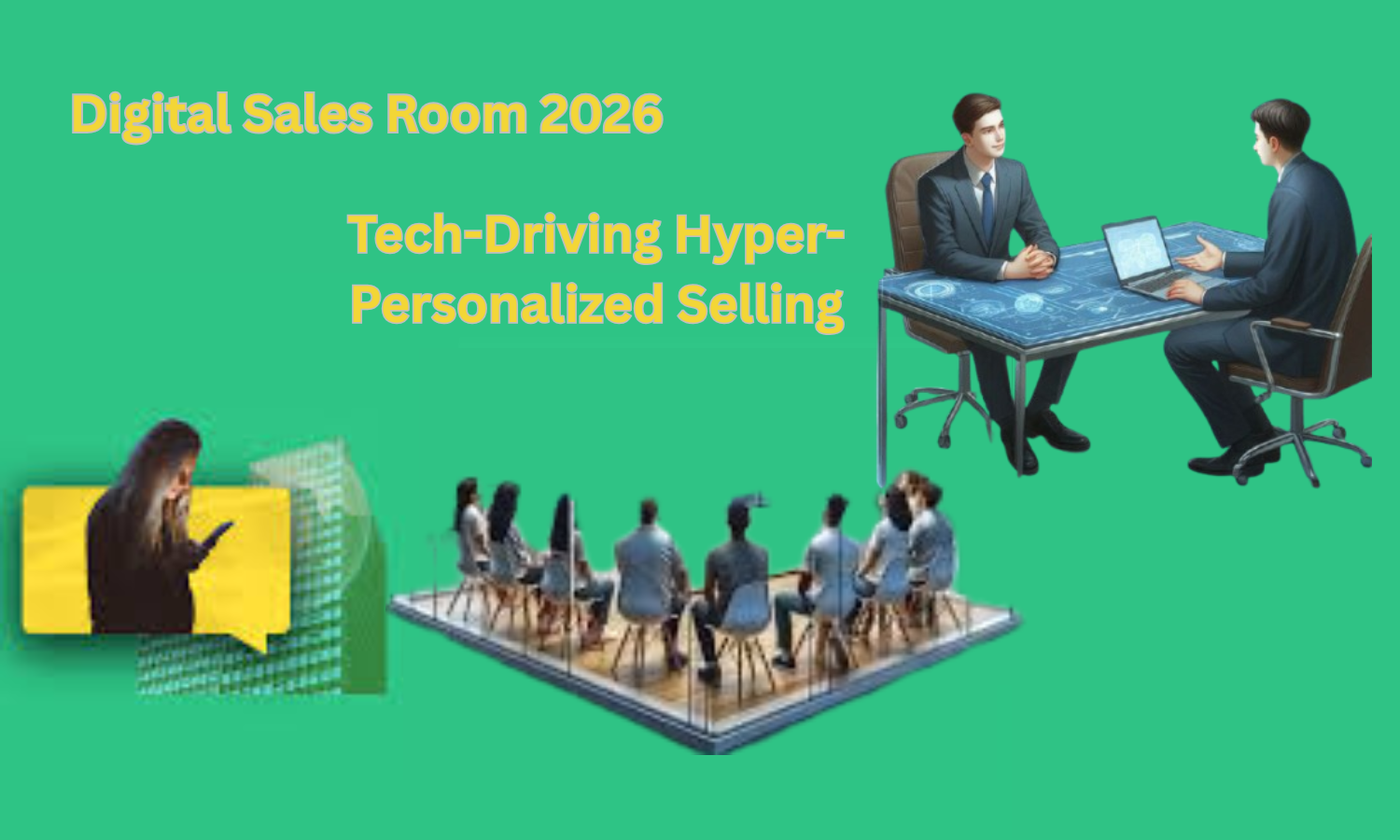
Digital Sales Rooms (DSRs): The space for viewing the presentation sits comfortably in a secure, dedicated hub where all the right stakeholders, internal as well as external, have access to dynamic content, pricing models, and communication streams.* The DSR tracks engagement *by individual* and hands tons of brainwaves to the sales team.
Technological Evolution: Immersive and Interactive
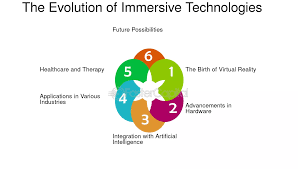
Technology currently bridges a divide between digital content and the real-world effect of the actual product.
1. 🌐 Interactive and branching narratives
Can this point be elaborated, and can you also provide pointers for clearer linking with Junaid?
The presentation is now more expansive than linear. The reason behind this nonlinearity is to enable the presenter to interact with the audience.
Live Polls and Quizzes: You can integrate these tools into software applications like Mentimeter to collect real-time data from participants.”
Feedback will solidify and reinforce talk points and prompt new directions.
“Choose Your Own Adventure” Pathways: Presenters are just given the means of choosing a non-linear route for pursuing through branching slide drives. If the menu chooses “Cost Reduction,” the seller clicks a button immediately to skip to the ROI calculator and the relevant efficiency case study without further discussion of that point.
Dynamic Data Visualizations: Instead of static charts, real-time dashboards are directly integrated into the slides.
—Client-specific key metrics ($L_{\text{revenue}}, C_{\text{operational}}, H_{\text{staff}}$) provided to the B2B presentation can be incorporated into a live dashboard estimating ROI for a prospective client for a target use case.
2. 🥽 AR/VR for Immersive Product Visualization
For very complex, elaborated B2B-type products (manufacturing, architecture, software), AR/VR has long since passed from being considered a novel thing to an actual necessity to show value.
The fact is, these sales tools use AR so that the buyer can experience that product, be it new supplies and stuff or a server rack, existing virtually in the real environment, shop floor, or his office space, so that he can view that on a tablet or smart glasses—without the pain of trying to judge size or compatibility.
Virtual Showrooms and Digital Twins: With VR, the stakeholders can walk around the client’s current process flow in a digital twin with enterprise software or SaaS and identify pain points, and then quickly jump into experiencing a better workflow with the proposed solution in a virtual environment.
There will be an almost instantaneous agreement among the buying committees in such cases.
Value Delivery: Measurable Results and Unpolished Trust
In the current scenario, every feature of a great sales tool creates really measurable results, with trust and transparency coming naturally above all.
1. 💵 ROI First
What should all the lines and all the slides be about? Bring measurable ROI always.
Quantified Problem Statement: State the cost of doing nothing very directly and flatly using the client’s metrics so high as to expose a potentially different/positive light against the very challenging benchmark required by the proposed solution.
Integrated Value Calculator: Not just letting the static pricing page sit there anymore. The tool consists of a modular, interactive Return on Investment (ROI) Calculator with Total Cost of Ownership (TCO). To view the immediate financial effect, the sales rep and customer work together to change parameters (e.g., number of users, expected efficiency gain, implementation time).
Return on Investment is:
Overall Cost of Ownership
(Total Value Realized) – (Total Cost of Ownership)
x 100%
2. 🤝 Developing omnichannel trust
Not just throughout the presentation, trust is developed via constant, pertinent engagement across all channels.
Immediate, customized value—for instance, a custom industry benchmark report or a customized “Readiness Assessment”—is used by the sales tool to urge buyers to voluntarily share their pain points and preferences (zero-party data).
Thinking Leadership Content: The presentation is a door to thought leadership material—original research, industry white papers, and expert interviews—that presents the seller as an indispensable advisor rather than just a supplier.
Ethical AI Transparency: The sales tool has to maintain honesty as AI progressively automates personalization, clearly stating how customer information is used to improve the purchasing experience, and so strengthening brand ethical behavior and trust.
Conclusion
The sales presentation instrument in 2026 becomes the perfect engine for luring consumers and forging long-term strategic relationships by accepting artificial intelligence, interactivity, and a relentless emphasis on measurable consumer results. summer results.


Leave a Reply