
Table of contents
How Nanoplastics Affect the Brain
Why Smaller Nanoplastics Feel More Dangerous
Crossing the blood-brain barrier (BBB)
How Nanoplastics Disrupt Neuron Activity
Neuroinflammation: the brain’s own immune reaction
Possible Connection to Neurodegenerative Diseases
What Scientists Are Looking Into Next
Introduction
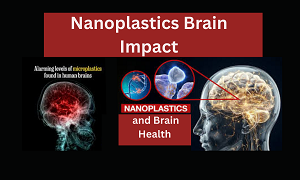
Nanoplastics and brain health are becoming a real key topic, as more scientists look into how super-small plastic bits may mess with the human nervous system. These particles can slip in through food, water, and even the air, and they might travel to delicate organs, the brain included. This growing body of research sheds light on a critical area of study: Nanoplastics Brain Impact: Why Smaller Particles Are Deadlier.
Some early findings hint that nanoplastics and brain health could be connected by inflammation and oxidative stress, too; these effects may help drive gradual neuron injury. Even if the research is not fully settled yet, getting clarity on this link is pretty important because exposure to plastic keeps rising in daily life.
🧠 How Nanoplastics Affect the Brain: Neuron Damage, Blood–Brain Barrier Risks and Neuroinflammation
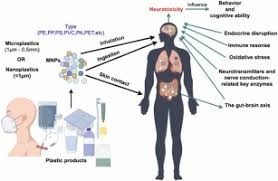
We live in a plastic-filled environment. And honestly, over time, plastic waste does not really “go away”; it breaks down into smaller bits, first microplastics, then nanoplastics, which are under 1 micrometer in size.
Now these particles are being found in the air, food, water, and even in human blood. And some recent studies are pointing to a worrying idea: nanoplastics might mess with brain performance by getting into neural tissue, then nudging neuron activity out of sync.
⸻ 1. Why Smaller Nanoplastics Feel More Dangerous
In toxicology, size is kind of a big deal. The tinier the particle, the easier it is for it to slip into biological systems.
For example, and unlike larger microplastics, nanoplastics can more easily bypass natural defenses, like, for example,
- gut lining barriers
- lung filtration systems
- immune clearance mechanisms
🔬 Key Biological Behaviors (kinda tricky this part)
- Cell membrane penetration: Very tiny particles can go straight into cells, like bypassing the normal path
- High surface reactivity: They show increased reactivity with tissues and even proteins, so they kind of cling and react more easily
- cloak. Protein corona formation: Nanoplastics bind with proteins, which may make cellular uptake more likely, and it is not just random—it’s more like a helpful cloak.
So, in the end, this kinda helps them move across the body a little more easily, more or less directly.
⸻ 2. Crossing the blood-brain barrier (BBB)
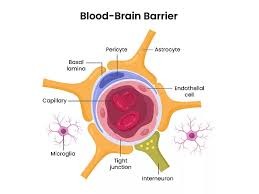
The blood-brain barrier (BBB) is like one of the body’s most protective systems; it guards the brain and keeps things in check.
Basically, it blocks toxins and pathogens from entering the brain, keeping things very controlled.
But some research points to ultra-small nanoplastics being able to cross it by
- Cellular transport pathways
- Disrupting tight junction proteins
- Passive diffusion when the size is extremely small
After that, once they are in the brain, nanoplastics may build up in neural tissue and mess with normal brain operations.
⸻ 3. How Nanoplastics Disrupt Neuron Activity
Neurons depend on electrical signals, plus chemical neurotransmitters, to function. Nanoplastics may interfere with both the signaling side and the chemical side, too.
⸻ Electrical signal disruption
Nanoplastics can kind of embed into neuron membranes, and it messes with several things, including
- Ion channels function in sodium and potassium balance
the overall electrical steadiness of neurons
- How fast signals actually get through
And so you end up with irregular neural firing patterns, not just a small shift, and it can feel kind of uneven.
🧬 Synaptic communication interference
At synapses, meaning the neuron connection points, nanoplastics may
- interfere with neurotransmitter movement
- bind to chemical messengers such as dopamine and serotonin
- lower the communication efficiency between neurons
And then, mood, memory, and cognition can take a hit, sometimes in ways that don’t immediately look obvious.
🔋 Mitochondrial damage, plus oxidative stress
Inside neurons, nanoplastics may
- harm mitochondria, which are basically energy-producing structures
- reduce ATP energy production
- Increase oxidative stress, and that’s like reactive oxygen species buildup.
Over time, this can weaken neuron function, slowly but steadily, and you might notice it more subtly, at first.
⸻ 4. Neuroinflammation: the brain’s own immune reaction
In the brain, there are immune cells called microglia, and they’re kind of like first responders… really, the initial, quick ones.
When nanoplastics get into brain tissue, microglia activate to fight off those foreign particles, but they can’t actually break down plastics effectively.
That mismatch causes chronic immune activation.
This state is often described as frustrated phagocytosis, which results in ongoing inflammation.
⚠️ Long-Term Impact:
Long-term neuroinflammation is usually linked with a few not-so-small things, like:
- Cognitive decline,
- Memory impairment
- Neurological stress
⸻ 5. Possible Connection to Neurodegenerative Diseases
Over time, long exposure to neuroinflammation, along with cellular stress, can start to look like early signals that people also see in
- Alzheimer’s disease
- Parkinson’s disease
- Other neurodegenerative conditions
Even though the science is still moving, scientists are actively working on the long-term neurological effects tied to nanoplastic exposure.
⸻ 6. What Scientists Are Looking Into Next
like the following: To better understand and handle this emerging risk, research is concentrating on things like the following:
- Finding ways to detect nanoplastics in human tissues
- Setting safer exposure limits
- Considering biodegradable material alternatives
- Running longer-term neurological health studies
🧾 Conclusion
Nanoplastics are no longer only an environmental concern; they may also act as a potential neurological health risk.
Their ability to enter the bloodstream, cross the blood-brain barrier, and interfere with neuronal function makes them a key topic for future research, honestly.
Cutting down on plastic exposure and strengthening environmental safety could help a lot with long-term brain well-being.
❓ FAQs
Q1: Can nanoplastics get into the human brain?
Yes, research suggests that ultra-small nanoplastics might cross the blood-brain barrier in some particular situations.
Q2: How do nanoplastics mess with neurons?
They could interfere with electrical signaling, disrupt neurotransmitter chat, and also reduce mitochondrial energy production.
Q3: Are nanoplastics dangerous for brain well-being?
Some studies show possible hazards tied to inflammation, oxidative stress, and neurological dysfunction, so yeah, it’s not something to ignore.


Leave a Reply