
Table of contents
The Foundational Shift: From 2D to 3D and Beyond
Organoids: “Mini-Organs” in a Dish
Organs-on-Chips: Micro-Engineering Meets Biology
3D Bioprinting: Constructing Living Tissues
Advanced Scaffolds and Hydrogels
Drug Discovery and Development
Sustainable Food Production (Cellular Agriculture)
Fundamental Biological Discovery
Challenges and the Future Horizon
Introduction
For a long time, the petri dish was the symbol of biology. Scientists used it to culture cells. They used it to figure out the mysteries of life. However, the modest dish is changing. It is going through a drastic change. We are moving away from simple, two-dimensional layers.
Now we resort to sophisticated, three-dimensional living systems. It is not just a minor upgrade. It is a huge leap. It opens a wide space for new ideas. This change affects medicine, agriculture, and materials science.
This change to different fields combines the three disciplines of biology, engineering, and data science. As one, they come up with new tools. These tools resemble the living tissue’s complex structure and function. In the end, it is a superior discovery platform. It is more accurate, ethical, and faster.
The Foundational Shift: From 2D to 3D
The traditional 2D cell culture is severely limited. Growing cells on a flat plastic surface is an artificial way. In the body, cells are in a complex 3D matrix. They talk to each other in all directions. They can also feel mechanical forces. Besides, they live in a certain biochemical gradient. 2D cultures do not have this background. As a result, their genes, metabolism, and drug responses are changed. This is an important reason for a considerable number of lab drugs that fail in clinical trials.
Advanced cell cultures resolve this “translational gap” problem. They employ numerous technologies.
Organoids: “Mini-Organs” in a Dish
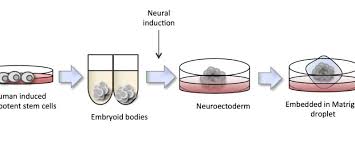
- Organoids: “Mini-Organs” in a Dish. Organoids are one of the most impressive advances. They are 3D self-organizing structures. They are derived from stem cells. They replicate the fraction of the real organs. This goes for the brain, liver, and kidneys, as well.
Innovation Driver: They offer scientists a model that is relevant to humans. Scientists examine development and disease. They try out personalized treatments. For instance, cancer drugs can be tested on patient tumor organoids. Thus, a cancer “avatar” is created. It helps find the most efficient treatment without the patient’s trial-and-error.
Organs-on-Chips: Micro-Engineering Meets Biology
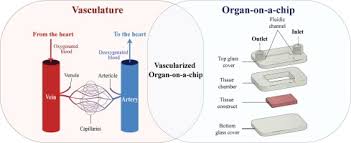
Organs-on-Chips: Micro-Engineering Meets Biology are very small devices whose size is comparable to that of a USB stick. They carry living human cells. The cells simulate organ activities and mechanics. The canals stand for blood vessels. The mechanical power imitates breathing or blood flow.
Innovation Driver: These chips produce a living environment. The scientists can then investigate inflammations and infections. They observe how drugs are taken in. Several chips can be connected. This forms a “Human-on-a-Chip.” Thus, it shows how a drug processed in the liver affects the heart
3D Bioprinting: Constructing Living Tissues.
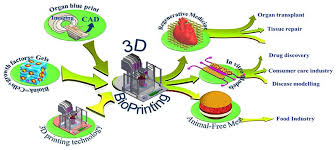
3D Bioprinting: Constructing Living Tissues. This method applies the usage of “bioinks.” Bioinks are living cells and gels. Tissue structures with the design already known are printed by the machine layer by layer. It gives very good freedom of cell insertion to the printer.
Innovation Driver: The bioprinting method leads the way to regenerative medicine. Ultimately, it is the printing of transplant tissues that is the aim. The skin grafts and the cartilage are some examples. Besides that, it facilitates the creation of drug-testing, reproducible disease models.
Advanced Scaffolds and Hydrogels
The smart matrix environment of the cells is still the most important. One of the most advanced biomaterials imitates the extracellular matrix of nature. The so-called “smart” hydrogels can be “tuned.” Their stiffness and porosity may be altered. There can be a release of growth factors at a certain moment
Innovation Driver: The scaffolds in question are a kind of guide for stem cells. They promote the maturity of the generated tissues. They enhance the drug toxicity tests, particularly the liver ones
The Fertile Landscape for Innovation. Such technologies are innovating across many fields.
Personalized and precise
Medicine has made it possible to manufacture models that are specific to individual patients. Thus, the entire healthcare system changes radically. Doctors utilize the cells of a patient to develop organoids.
They serve as the platform for testing an individual’s pharmaceutical responses.
They locate the rare disease mutations.
They support far-reaching cancer treatments.
Drug Discovery and Development
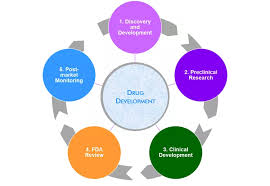
The pharmaceutical industry is gradually shedding its old image.
De-risking Pipelines: Organoids and chips offer better data before human trials.
Disease Modeling: Complex models allow the study of human diseases like Alzheimer’s.
Reducing Animal Testing: This is a more ethical, human-relevant alternative.
Sustainable Food Production (Cellular Agriculture)
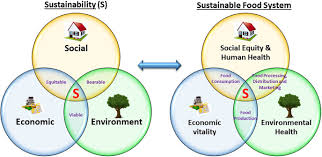
One of the most obvious innovations is that of meat grown in labs. It is a process that uses animal stem cells. It thus really grows meat in bioreactors. Though no animals are killed in the process.
Innovation Driver: This puts an end to the problem of animal suffering resulting from meat consumption. At the same time, it tackles the environmental issues caused by farming. It also makes the world a safer place in terms of food provision. The method is utilized for producing fish, leather, and breast milk as well.
Cosmetics and Consumer Safety
The motive behind the creation of the cruelty-free products was the main driver of this. The advanced skin models have now become the standard. They are the means for testing irritation and toxicity. It caused the implementation of bans on animal research in the cosmetics industry.
Fundamental Biological Discovery
These instruments pave the way to new biology. For instance, brain organoids provide a new understanding of human development. Scientists can even observe development and disease directly.
Challenges and the Future Horizon
It is still somewhat of a challenge for them to have standardization, scalability, and other issues. Besides, it is difficult to achieve full maturity of organoids. There are ethical questions, in particular for brain organoids, that require engagement.
What is going to follow is the use of artificial intelligence in combining.
AI will be the one to comprehend the otherwise complicated data coming from these living systems. It will be able to find the patterns that humans would be totally unaware of.
Conclusion
We are no longer restricted by the static petri dish. The advanced cell cultures provide us with a novel perspective. We see biology as a living, three-dimensional, and human concept. We create living micro-tissues that are a perfect reflection of our physiology. This is the creation of a sandbox for the innovators. This leads to a quicker discovery process. It makes medicine more personal. It transforms the foundations of the industry. This is not simply another laboratory method. It is the dawn of the new biorevolution


Leave a Reply