
Table of Contents
Understanding Emotional Resilience
Why Adversity Can Lead to Growth
Tools and Therapies for Building Inner Strength
Overcoming Adversity with Inner Strength
Introduction
Life presents people with multiple obstacles, which include both expected challenges and unexpected difficulties. People experience emotional development through adverse experiences, which test their limits yet enable them to become emotionally resilient, build inner strength, and achieve personal development.
People who learn to navigate difficult situations experience greater strength combined with increased wisdom and improved emotional stability. Emotional resilience requires people to experience emotional pain, yet they should not deny the existence of their problems. People who practice this skill can pivot from obstacles while they restore their full potential.
Modern society needs people to develop resilience as their primary method for achieving mental wellness, preserving their emotional balance, and finding happiness in life and their professional careers.
This is a very good guide that explains the function of adversity in our growth and, at the same time, reveals the ways through which a person can gather emotional strength and apply it in daily life.
Understanding Emotional Resilience
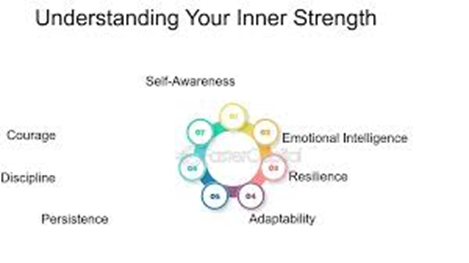
What Is Emotional Resilience?
f(x)=Inner Strength + Adaptability + Perseverance
Emotional resilience functions as the mental and emotional ability of a person to handle different life challenges, which include stress and trauma, setbacks, and other difficulties.
The emotional resilience of people enables them to recover from difficulties because they maintain their hope, their determination, and their emotional stability.
Resilience does not guarantee that a person will maintain constant emotional balance. People experience both positive and negative times throughout their lives.
What it indicates is that such a person has worked on and developed sound coping mechanisms that enable him/her to make their way out of the most difficult scenarios.
Key Characteristics of Resilient People
Those whose emotional resilience is well-developed usually display:
A sense of self-worth
- Flexibility
- Being in touch with one’s emotions
- Optimism
- Analytical acumen
Effort and steadfastness
It is these traits that help people to be mentally unyielding or stiff in trying times.
Why Adversity Can Lead to Growth
Besides offering opportunities for learning life skills, hardships are also providing reasons for personal change, which reliance and success cannot.
The Hidden Benefits of Adversity
Getting a Boost in Emotional Strength
Enduring tough times can help to build up emotional stamina and the readiness to deal mentally with one’s situation.
Sharpening One’s Problem-Solving Skills
Hardships bring about resourcefulness, thinking out of the box, and the knack of adjusting to various situations.
Heightened Self-Awareness
The experience of suffering provides people with an insider’s view of their feelings, effectiveness, and frailties.
Deepened Empathy
Those who have had to battle with difficulties are often moved to develop sympathy for the struggles of others.
Enhanced Confidence
A person’s confidence is taken to a notch higher whenever he/she progressively surfs the waves of challenges.
Adversity is undoubtedly a source of pain, but when you zoom out of the moment, it can turn out to be a stepping stone for one’s self-development.
How to Build Inner Strength
One cannot become emotionally resilient overnight or by luck. Rather, it comes from experiential
learning and positive mental traits.
Practice Self-Reflection
Reflecting on oneself allows a person to get a better insight into his/her thoughts, feelings, and actions.
Reflection time, used for going over one’s life, is a means of improving self-awareness and choosing a desirable course of action.
You can engage in self-reflection through:
- Penning down your thoughts and feelings as a diary writer
- Doing meditation
- Spending time for silent thinking
- Setting personal objectives
Develop Emotional Intelligence
Emotional intelligence means being in a position to identify emotions in oneself and in others, perceive their significance, and use this understanding to make decisions and perform actions.
Those with heightened emotional intelligence can:
- Express themselves more clearly
- Stay composed under pressure
- Create and maintain rapport
- Thrive in a disagreement or conflict situation
A higher level of emotional intelligence brings about stronger bonds.
Cultivate Courage
Having courage comes in handy in the case of a threat or an unknown event. Building courage is far from getting rid of fear; it is merely coming up with a course of action despite the presence of fear.
To increase courage, you can:
- Experiment with new things
- Go on and confront your fears one at a time
- Using affirmations
- Relating to growing pains
Foster Resilience Through Perseverance
Resilience is the result of the ability of a person to continue their endeavor or wander the path of a certain goal after encountering a setback.
The following are some examples of good ways to build resilience:
- Looking at failure as a terrific opportunity for growth
- Expecting a bright future
- Making goal plans that can be accomplished and are realistic
- Understanding the development done and rewarding oneself
Usually, the source of strength is steadfast effort over a long duration.
Tools and Therapies for Building Inner Strength
Several tools and therapies can help individuals build inner strength, including:
– Mindfulness: Mindfulness practices, such as meditation and deep breathing, can help individuals stay present and focused, reducing stress and anxiety.
– Therapy: Individual therapy can provide a safe and supportive environment for individuals to explore their emotions, develop coping strategies, and build resilience.
– Journaling: Writing down thoughts and feelings can help individuals process their emotions, gain insight into their experiences, and develop a greater sense of self-awareness.
– Support Networks: Building strong relationships with supportive family and friends can provide individuals with a sense of belonging and help them develop resilience.
Overcoming Adversity with Inner Strength
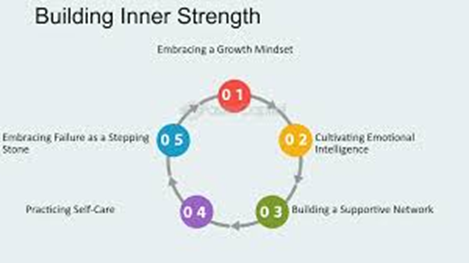
When faced with adversity, individuals can draw on their inner strength to overcome challenges and achieve personal growth. This involves:
– Facing Fears: Confronting fears and anxieties head-on can help individuals build courage and develop resilience.
– Practicing Self-Care: Taking care of one’s physical, emotional, and mental well-being is essential for building inner strength and resilience.
– Focusing on the Present: Mindfulness practices can help individuals stay present and focused, reducing stress and anxiety.
– Seeking Support: Building strong relationships with supportive individuals can provide a sense of belonging and help individuals develop resilience.
Conclusion
We all face hard times. However, these rough patches shouldn’t be the reasons why we see ourselves negatively. Also, they can serve as a turning point to grow emotionally and get stronger. Emotional resilience is a combination of having inner strength, practicing mindfulness, being supported, and having a strong will. When you have these qualities, you will be in a position to handle the difficulties of life in a good way. Not being touched by life circumstances is not the biggest source of our strength. It is the ability to bounce back that makes us strong.
FAQs
What is emotional resilience?
Emotional resilience is the ability of a person to recover from emotional distress caused by difficult and stressful situations
Can resilience be learned?
Yes, resilience can be acquired as a skill through the development of positive habits and emotional awareness and the practice of coping methods.
How does adversity build strength?
People develop their strength through adversity because they gain new abilities, which include coping skills, patience, self-confidence, and emotional endurance when facing challenging situations.


Leave a Reply