
Table of contents
How Meditation Changes Your Brain After Just 7 Days
Meditation May Help Quiet Mental Noise
Meditation and Neuroplasticity
How Meditation May Affect Stress and Mood
Meditation and the Brain’s Communication System
The Possible Impact on Pain and Immunity
Can meditation help with mental clarity?
How to Start a Simple Meditation Practice
Introduction
Meditation has been done for thousands of years to encourage inner calm, emotional steadiness, and clear thinking. At first, a lot of people saw it as spiritual stuff, or sort of “personal subjectivity,” but now neuroscience is starting to show real, measurable biological stuff happening behind it.
Today, scientists are discovering **how meditation changes your brain** through measurable effects on neuroplasticity, stress regulation, and brain communication.
A recent study, with researchers from the University of California, San Diego, looked into what goes on when someone meditates quite intensely for maybe just seven days and how that could affect the brain and the nervous system, but also general well-being.
The results seem to point to something bigger than just mood. The team noticed shifts tied to brain coordination, stress control, neuroplasticity, and even immune function, which is kinda wild if you think about it.
⸻ How Meditation Changes Your Brain After Just 7 Days

In the study, 20 healthy adults joined a week-long meditation retreat, and they did a total of about 33 hours with guided meditation, plus learning sessions included, sort of overlapping at times, but mostly it was structured like that
Before and after the retreat, researchers tracked neurological and physical responses.
Overall, the findings suggested that intensive meditation can create visible changes in how the brain works and how different areas “talk” to each other.
⸻ Meditation May Help Quiet Mental Noise
Every day life sort of overloads the brain with streams of information, alerts, tension, and distractions. Then it turns into that constant “mental chatter” where thoughts speed up from one worry to another or one plan to the next, and yes, it feels hard to stop.
After the retreat, researchers saw better coordination across brain regions, sort of like things getting more in sync here and there.
Also, the participants who said they had a more profound meditative experience showed stronger neural synchronization patterns, almost as though the brain runs more smoothly when the attention is deeply anchored in a steadier sort of way.
⸻ Meditation and Neuroplasticity
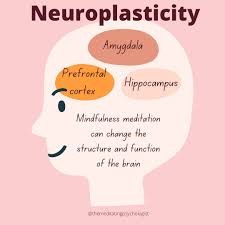
One of the more interesting pieces involved neuroplasticity, basically the brain’s ability to adjust, reshuffle itself, and create fresh neural pathways.
The researchers took blood samples from participants. Then they used the participants’ plasma on neurons grown in a lab.
What they found seemed to suggest that compounds present after intense meditation may help with things like the following:
- Neuron growth
- Synaptic connections
- Cellular adaptation
- Brain repair processes
So it’s not only an “emotional” effect but potentially a biological one too.
⸻ How Meditation May Affect Stress and Mood
Meditation is often tied to relaxation, but scientists think it could also quietly nudge neurotransmitters and the stress pathways, sort of indirectly.
Possible upsides may include:
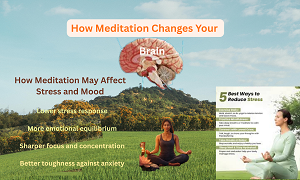
- Lower stress response
- More emotional equilibrium
- Sharper focus and concentration
- Better toughness against anxiety
A lot of participants mentioned that they felt a bit calmer, more connected, and generally clearer emotionally during the retreat, like it was kind of a steady easing for them.
⸻ Meditation and the Brain’s Communication System
The study also hinted that meditation may improve communication between brain regions.
When brain areas share signals more effectively, it matters for:
- Attention
- Decision-making
- Emotional regulation
- Memory formation
If those systems work together, mental processing may feel less scattered and steadier.
⸻ The Possible Impact on Pain and Immunity
Researchers reported changes connected to inflammation and the body’s natural pain management systems.
Meditation looked like it helped create a more balanced immune response, not just a simple “boost immunity” story.
They also noted upticks in endogenous opioids, the body’s own natural pain-relieving chemicals, kind of like internal analgesics.
That could help explain why some folks say they feel
- Less chronic pain
- Better ability to handle stress
- Improved emotional well-being
⸻ Why This Research Matters
Stress-related troubles, anxiety, burnout, and mental exhaustion are showing up more and more in a fast-moving world.
Studying meditation and brain health may help researchers get a clearer grip on non-drug methods for supporting:
- Mental wellness
- Emotional regulation
- Chronic stress management
- Cognitive performance
Longer-term research is still needed, but the current results suggest the brain could be a lot more changeable and adaptive than most people kind of thought. Like, it might not be as fixed, not even close.
⸻ Can meditation help with mental clarity?
Most folks meditate for better focus and to ease the mental overload, you know, that constant inner noise and strain.
Some studies suggest meditation may support:
- Attention span
- Memory
- Emotional control
- Sleep quality
- Cognitive flexibility
Even shorter daily sessions might calm the constant overstimulation and improve awareness.
⸻ How to Start a Simple Meditation Practice
Meditation doesn’t have to be complex.
Beginners can try:
- 5–10 minutes daily
- Quiet breathing exercises
- Guided meditation apps
- Mindfulness techniques
- Gentle body awareness practices
Being consistent often matters more than going long.
⸻ FAQs
Can meditation really shift the brain?
Some research suggests it could encourage changes in brain connections and neuroplasticity, not in some magic overnight way, but more like slow adaptation.
How long until meditation actually affects the brain?
A few studies indicate that measurable effects can show up after days or weeks if your practice is steady and you do it consistently.
Does meditation cut down stress?
Meditation may help tune the body’s stress response, and it can support emotional steadiness, too. So you might feel less pulled around by everything.
Can meditation boost focus and memory?
Yes, meditation may boost concentration, attention, and general mental sharpness. In other words, it helps you stay in the moment, rather than getting dragged off by noise.
⸻ Final Thoughts
Meditation isn’t seen only as spiritual or purely for relaxation anymore. More scientific evidence is accumulating that it can steer brain activity, help regulate stress, support emotional equilibrium, and improve general well-being in ways you can actually measure.
Even so, more investigation is still needed, but the ongoing work on meditation and neuroplasticity keeps pointing to the idea that the human mind is adaptable, kind of in a very real, tangible sense.
In a world that’s full of stress, noise, and mental overload, meditation starts to function as a practical route to sharpen mental clarity and emotional fortitude, naturally, without turning everything into a complicated thing.

Leave a Reply