
Table of contents
What Is Transcranial Magnetic Stimulation (TMS)?
How Does Magnetic Therapy Work?
TMS for Treatment-Resistant Depression
Quick Results and Success Rates
What to Expect During TMS Treatment
Introduction
Depression still leads to a great deal of suffering all over the world. People with this condition usually do not get well enough just by taking drugs or having talk therapy. Doctors have recently recognized transcranial magnetic stimulation, abbreviated as TMS, as one of the most promising therapeutic options in the near future. It is based on the latest advances in neuroscience.
TMS is a non-invasive brain stimulation technique that releases magnetic pulses to energize the brain regions involved in mood control. TMS offers a brain function-targeted intervention. Moreover, it outperforms the traditional drug-based strategies in delivering a greater degree of improvement to patients who have been resistant to treatment.
Research into mental health therapies through 2026 shows that TMS treatment is the most promising development among new mental health treatment options. It is a mental health treatment approach that offers not only safety and effectiveness but also quick results.
What Is Transcranial Magnetic Stimulation (TMS)?
Understanding Magnetic Therapy
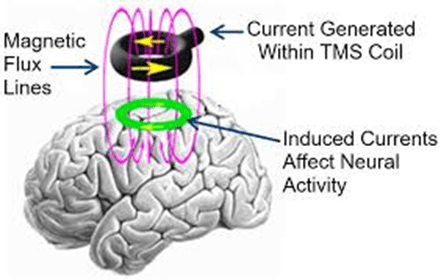
Magnetic Pulses Stimulating Brain Neurons
Then you get the picture. TMS is a technique approved by the Food and Drug Administration (FDA) that harnesses electromagnetic energy to activate brain neurons associated with mood. Primarily, the therapy targets the dorsolateral prefrontal cortex (DLPFC) since it is the main brain area implicated in emotional regulation and depression.
Unlike Electroconvulsive Therapy (ECT), TMS does not require the following:
- Anesthesia
- Sedation
- Induced seizures
- Hospitalization
Patients stay conscious during the procedure, and meanwhile, they can carry on with their normal lifestyle immediately after the treatment.
The FDA approved TMS treatment for major depressive disorder in 2008, but studies show it could be used to effectively treat the following:
- Obsessive-Compulsive Disorder (OCD)
- Migraine
- Smoking cessation
Sometimes anxiety disorders
How Does Magnetic Therapy Work?
Essentially, the therapist locates the TMS coil very near the patient’s head.
The apparatus produces a series of quick magnetic pulses that penetrate the skull and stimulate neuronal activity.
The Main Mechanisms Behind TMS
1. Enhancing Neuroplasticity
TMS facilitates brain synaptogenesis. This phenomenon, referred to as neuroplasticity, may enable a person with depression to interrupt their persistent negative thought loops.
Depressed people usually have diminished function in some areas of their brains. TMS assists in rectifying these dysfunctional brain patterns, which, in turn, enhances mood control.
3. Influencing Neurotransmitters
The release of critical brain-transmitting chemicals may be modulated by the magnetic intervention.
- Serotonin
- Dopamine
- Norepinephrine
These neurotransmitters turn out to be the major players in mood and emotional regulation.
TMS for Treatment-Resistant Depression
Most patients who do not respond to antidepressant medications experience major changes in their conditions after undergoing TMS.
What is Treatment-Resistant Depression?
In case a person has tried different antidepressant medications or various ways of therapy and still cannot get any positive results, this person is said to have treatment-resistant depression.
Here, TMS becomes an option if recovery without the systemic side effects frequently caused by medications is desired.
Clinical results indicate that patients obtain the following benefits:
- Lessening of depressive symptoms
- Improved focus
- Enhancement in the quality of sleep
- Motivation increase
Lowering or eliminating suicidal thoughts
Benefits of TMS Therapy
Why More Patients Are Choosing Magnetic Therapy
Non-Invasive Procedure
No need for surgery or implants.
Drug-Free Treatment
The treatment does not involve any use of drugs; hence, it is ideal for drug-sensitive people.
Minimal Side Effects
Typically, the side effects experienced are very mild and short-lived.
No Recovery Time
Patients complete their sessions and immediately return to their work duties or daily activities.
Improved quality of life
Patients report that their quality of life improved because they experienced:
Most of the patients have noticed/experienced:
- More balanced emotions
- Increase energy
- Higher productivity
- Better socialization
Quick Results and Success Rates
The speed at which the symptoms can be alleviated is indeed one of the most remarkable features of TMS.
This is because traditional antidepressants take days or even weeks before the patient can experience any noticeable improvement
. Conversely, the majority of TMS recipients start noticing their symptoms improving within a few weeks of treatment.
Accelerated TMS Protocols
The latest protocols, such as Stanford Accelerated Intelligent Neuromodulation Therapy (SAINT), have achieved great success.
Some of the outcomes observed:
- Nearly 79% of patients with severe depression obtained remission
- The relief from symptoms was faster
- There was a huge decrease in suicidal ideation
On the other hand:
Normal TMS treatments have some effectiveness
- About 50% of patients respond to treatment
- More than 30% achieve remission
If counseling is combined with TMS, the results may be greatly enhanced.
What to Expect During TMS Treatment
A TMS treatment program usually consists of the following:
- 5 times a week.
- 4 weeks to 6 weeks of therapy.
- Sessions of 3 min. to 40 min.
During the Procedure
Generally, patients:
- Take a comfortable seat in a chair
- Put on hearing protectors
- Stay awake and alert
Magnetic pulses to the targeted brain parts are delivered by the coil, producing a sensation similar to being tapped on the head.
Compared to medical procedures requiring time for recovery, TMS, in general, does not interfere with the daily schedule.
Side Effects and Safety
TMS has been proven to be a safe and tolerable technique.
Common Side Effects
These side effects are mild and gradually get better during treatment.
- Mild headaches
- Scalp discomfort
- Others feel tingling sensations.
- In some instances, facial muscles twitch.
There are occurrences of lightheadedness.
Rare Risks
Seizures, a major complication, occur in 0.01% of all the treatment sessions, making this therapy extremely safe.
One of the good reasons why TMS is gaining ground and replacing drugs is that it does not cause the following:
- Weight gain
- Sexual dysfunction
- Dry mouth
- Digestive problems
These are almost unavoidable side effects of most antidepressant medications.
Future of Magnetic Therapy
Numerous attempts are ongoing to push the boundaries of magnetic brain stimulation even further.
Emerging Innovations
Accelerated TMS
This approach involves compressed treatment times accompanied by more prompt results.
Image-Guided TMS
Visualizing the brain enables treatment to be more accurate and also more specialized to each patient.
Expanded Medical Applications
The scientific community sees potential in TMS regarding the following conditions:
- PTSD
- Bipolar depression
- Chronic pain
- Alzheimer’s disease
- Anxiety disorders
Magnetic therapy could well be leading the charge as a staple of global mental health treatments with further neurological advancements.
Conclusion
Indeed, Transcranial Magnetic Stimulation (TMS) is set to be the great redeemer of depression therapy in the current times. First of all, it does not do any physical harm; second, it posts good results in a very high percentage of cases; third, it exposes one to very minimal side effects; and last but not least, it brings about a fast alleviation of symptoms. All these factors combine to make it a very winning formula for a depressed individual to consider.
It should only be regarded as a fresh ray of hope and the chance to enhance one’s living, provided one has sincerely tried medications and psychotherapy, but to no avail.
Since researchers are uncovering more effective TMS treatment methods and its use in more areas, naturally, we anticipate this revolutionary therapy to have an even greater influence on mental health care in the future.
FAQs
Is TMS therapy painful?
All that a patient is going to perceive is a very slight tapping on the scalp.
How long does TMS treatment take?
Generally, one will take 4 to 6 weeks of the treatment duration, having sessions five times per week.
Is TMS approved by the FDA?
Indeed. 2008 was the year when the Federal Drug Administration gave its approval for the usage of TMS in the treatment of depression.
Can TMS replace antidepressants?
Actually, a few patients do try to taper down on their medicine after a successful run of TMS. In any case, a health care provider should always be consulted before making any changes in treatment.
Who is a good candidate for TMS?
Those suffering from depression that is resistant to medications would, undoubtedly, be the ones getting the most out of TMS, although it may also be very helpful for those having side effects of antidepressants.


Leave a Reply